Wednesday, August 23, 2017

Story Hand-Me-Downs

Story Hand-Me-Downs

I'm squirreling away gifts into the Christmas-Closet and knitting mittens.

A small pile of books is forming. I noticed something they share in common. They recall true events. What a strange coincidence. I'm guessing that if an adult finds the events interesting, a child would, too.

People of all ages enjoy (and can learn something) from a well-written picture-book.

Out of the Woods - A True Story of an Unforgettable Event by Rebecca Bond is a brand new hardcover. What beautiful illustrations! (Pen & ink with color wash.)

This gentle story was handed down by the author's grandfather. An old photograph of him as a boy is in the "Author's Note" - surrounded by the mittens I made for my 3 grandchildren.

The author's grandfather.   Mittens for my grandchildren.
The setting is the woods of Ontario, Canada, 1914. Young Antonio's mother runs a hotel for lumber jacks and trappers. With no other children nearby Antonio pokes his nose into the goings-on of the hotel and wanders in the woods. During a forest fire a remarkable event brings people and animals together. (Pub. 2015)

Pages inside "Out of the Woods"
I purchased a used copy of Mailing May by Michael O. Tunnell. Although the story is fictionalized the historical facts are accurate. Five-year-old May Pierstorff really was mailed from Graneville to Lewiston, Idaho the winter of 1914.


May would like to spend some time with her grandmother but a railroad ticket would cost a full day's wage for her father. He can't afford that. But May's parents come up with an idea. Mail May. Because she, with her suitcase, weighs under 50 pounds, she is classified as a baby chick. Her uncle Leonard works in the postal car. He could easily watch over this special live parcel. The train's conductor approves it.

Pages inside "Mailing May"
The author gathered his facts from museums and word-of-mouth, included May's son. Mr.Tunnell wrote his book to show that ordinary people can come up with creative ways to solve a problem. The illustrations are richly saturated in color with accurate details of the period. (Pub. 1997)


Just before sitting down to write about The Matchlock Gun by Walter D. Edmonds, Dean shared a bit of news. The thought had already crossed my mind that it is doubtful whether The Matchlock Gun would win a Newberry Award today.

Society thinks differently than it did in 1942. Therefore, when the news reached my ears it seconded my suspicions. Today, general opinion seems to be that guns are bad.

To those, however, who believe in the right to self-defense, the 2nd amendment of the U.S. Constitution, and small government, guns are not bad. It is violent people and big, tyrannical governments that are bad.

The news? Yale University decided to cover up an offensive musket held by a Puritan. (I googled. A group of 500 Puritans founded Yale in 1638.) In this carved stone relief on the outside of the Yale library, the musket is pointing in the direction of an Indian. The arrow, grasped in the Indian's hand, pointing toward the Puritan, is not covered up. Clay was used to cover-up the musket. This way future generations might find it (and see how far we've progressed to becoming a gun-free, 2nd-amendment-free society?)

Pages inside "The Matchlock Gun"  Antique doll quilt
It's Colonial America in The Matchlock Gun. Young Edward's father is away defending a village near Albany, New York, from an Indian raid. Edward, his mother and little sister, are home. Near the end of the story Edward (frightened but brave) is forced to use drastic measures.

His mother is being chased up the hill and to the door of their cabin by an attacking Indian. Edward, in the kitchen, stands behind his grandfather's heavy antique Spanish gun (that is propped up on the table). He has one shot.

He fires just as the Indian strikes his mother in the shoulder with a tomahawk. Mother is wounded. The Indian dies. The boy saves his mother's life. (No red blood is depicted.) (Pub. 1941)

The author's story was handed down to him as part of his personal family heritage.

This rooster pin-cushion has wings.  Missouri Star Quilt Co. has a chicken pin cushion tutorial.
I'm uncertain whether Thunder Cake by Patricia Polacco is a memory from the author's childhood. But it seems so. She dedicates it to her Babushka Carle and writes in first-person, starting with: "On sultry summer days at my grandma's farm in Michigan . . .

Dean and I went bonkers at this enormous used-book sale this summer.
A Russian-immigrant grandmother deals cleverly with her granddaughter's fear of thunder. As a summer thunderstorm approaches Grandma relies upon her granddaughter's help to make a Thunder Cake. The granddaughter is busy collecting eggs from the hen house, milk from the cow, an over-rip tomato from the garden. Yes, a tomato. The cake must be made during a thunderstorm for it to be authentic Thunder Cake. By the time the cake is in the oven and the table is set, thunder is loudly crashing overhead. But when the cake is cool and frosted it is delicious; a tangible proof of  bravery.

A recipe for Thunder Cake, a chocolate tomato layer cake, is found in on a back page. 15 years ago, after being intrigued by a muffin recipe in Joy of Cooking, with the "secret ingredient" of tomato, I made a dozen. They were good. Therefore, it wouldn't surprise me if Thunder Cake was tasty, too. (Pub. 1990) I picked up a used copy.

Our herb garden around the back patio
Post Script
Zucchini
Zucchini burgers with garden herbs smell delicious while cooking.

When summer brings zucchini, I make vegetarian burgers. A gluten-free, bell pepper-free batch for the Man-of-the-House. A batch with "the works" for me includes finely grated carrot. Yum.

A generous helping of minced herbs from the patio garden add flavor: chive, oregano, sweet basil, thyme, parsley. I cook the burgers in butter and olive oil until brown and crispy on the outside, but creamy-soft inside.

The parsley is store-bought. (Can you see why?) Peter Rabbit lives in the back yard. Benjamin Bunny lives in the front yard. They love parsley. And leave none for us. Dean noticed that finicky Peter won't touch the Italian herbs. "I wonder if the rabbits in Italy have acquired a taste for them," I said "I hope our rabbits never do."


The Doll Quilt
The little blue-and-yellow quilt is an antique doll quilt presented to me by a family we invited for lasagna dinner. It was a sweet and thoughtful surprise. At close inspection I see it was a young girl who hand quilted it because the quilting stitches are wobbly. Cute. I wonder what her doll looked like.


The Mennonite Historical Society raises money each year with this enormous used-book sale out on their lawn. Some of the books fit under a tent. We found armfuls of gems.


Books reviewed are linked to Amazon.

Happy Reading,
Karen Andreola

(karenjandreola(at)gmail(dot)com
Typing-in my e-mail reduces spam. Thank you. 

Tiny oregano flowers fill-out my little bouquet nicely. 


Monday, August 7, 2017

Sipping Pages Like Tea

Sipping Pages Like Tea
I'm excited. Charlotte Mason's writings are back in print. Now in a large format. My new set has arrived and I've been writing in the margins! I love my new books. As always I am sipping the pages slowly, like tea.


The company Simply Charlotte Mason has published the series anew. We authorized use of the copyright material on the covers and the front-matter of our pink volumes. They asked Dean to write an introduction for this new edition. Here's a piece of it: 

"The 21st century has brought changes in the way people access, read, and store books. The demand for printed books has diminished while the demand for e-books has increased. Sadly, we are no longer able to continue our printing of The Original Homeschooling Series. Yet thanks to kindred spirits at Simply Charlotte Mason, we have been able to pass the baton, so to speak, and partner with them to see The Original Homeschooling Series safely back in print."


I'm happy to announce that the beautiful old-fashioned font is intact. The pagination remains the same, too.

Both are what I've become so fond, and so familiar, reading. I like how my eye can land on the page on the exact geographical spot of the pages of my pink volumes.

This is good news for those of us who are involved with personal and group study.

It preserves footnoting and referencing so that we can all be literally on the "same page."

More good news. The print is larger (for my old eyes) and the ink is darker and easier to see.
How is it that I'm noticing gems I hadn't noticed before? Was this bit always here? I asked myself.

Re-reading is re-discovering. And Miss Mason's ideas are Christian-life-wisdom for people of all ages; even grandmothers.


Beautiful old-fashioned font is intact. Pagination is the same. A larger, darker size print. Yeah.

Peony taken on Dean's walk, like a flower in the painting.


These days, I share tips with my daughter long distance, over the telephone when she asks. She is home-teaching. What exhausting effort Sophia puts into her bright, rambunctious children.

Sometimes she gets muddled. I suspect a probable cause. She sees an endless scroll of questions on Facebook sites. Here young mothers seek specific advice on learning materials. Then, a myriad of well-meaning, but conflicting answers flood in.

"I think you might be experiencing information-overload," I tell her. "Reading a product review and also a couple pages of a well-written book is a calmer, more consecutive, and less confusing practice," I remind her.


Old oil painting. Gift from Dean. A bouquet that never withers.

In the days of her girlhood, I endeavored to live Charlotte Mason's advise. I rarely talked about the philosophy with my children.

Now Sophia is the home-teaching mom. She is learning what to "think" as well as what to "do."

It's always a joy (and relief) to hear what she has decided to apply, and that it is working satisfactory, if not splendidly well, as yet.

It takes time to see progress with anything newly adapted. I commend her hourly effort.


The pages of Miss Mason's books are a big help with child training, home atmosphere, and discipline.
They provide a guide to the kind of books that open the door of a child's mind and create that wonderful "intellectual glow" on the faces of the children that make all the time and effort worthwhile.

I enjoy laying one of my new Charlotte Mason books open where my lap-top computer used to rest before it died. (I'm in no rush to replace it.) I like to read 2 or 3 pages in an afternoon quiet-time. That's all.

I might pencil a note in the margin. Also, whatever especially speaks to me I copy into a hardcover-notebook.


See the bunny? It sleeps under the lilies and ate every lily leaf and parsley leaf there. Humph.
A slow reading is the only doable one for me. Even during my years of young motherhood, when I sometimes had to contend with a quickening sense of urgency in wanting to understand Miss Mason, I sipped the pages like tea.

I didn't worry about having to understand absolutely everything I read. Ideas have a way of growing on you. Weeks or months would go by when I let "thoughts think themselves."*1 I would go about the business of life. Ideas have the potency to stand up to simmering on the back burner.*2 The "life" part (the application of practical ideas) is where the most patience and persistence is required. Keep plodding, my friends.

"Steadfastness is, of course, of the essence of all Loyalties," says Miss Mason.*3 

19th century cradle, gift from Dean. I wonder whose baby slept in it.


Here's a link to the new series for sale at Simply Charlotte Mason. 

It contains hidden gems to uncover. Gems to grow-by.


End Notes
*1  Charlotte Mason, Parents & Children, pg 156 "Thoughts Think Themselves."
*2  Ibid, pg 34 "Now is it not marvelous, that recognizing as we do the potency of ideas, both the word and the [concept] it covers, enter so little into our thought of education?"
*3 Charlotte Mason, Ourselves, Bk 1, pg 123
Yours,
Karen Andreola
"A Philosophy of Education" is one of my favorite volumes and probably the most often quoted in "Companion." 


Monday, May 29, 2017

Finding Your Feet - Part One

Finding Your Feet Part One
"Can I do this?" I asked myself. I was a young mother. Children's books were not part of my childhood. I was a recent Christian. I had no teacher's training. But I was determined to home-teach.

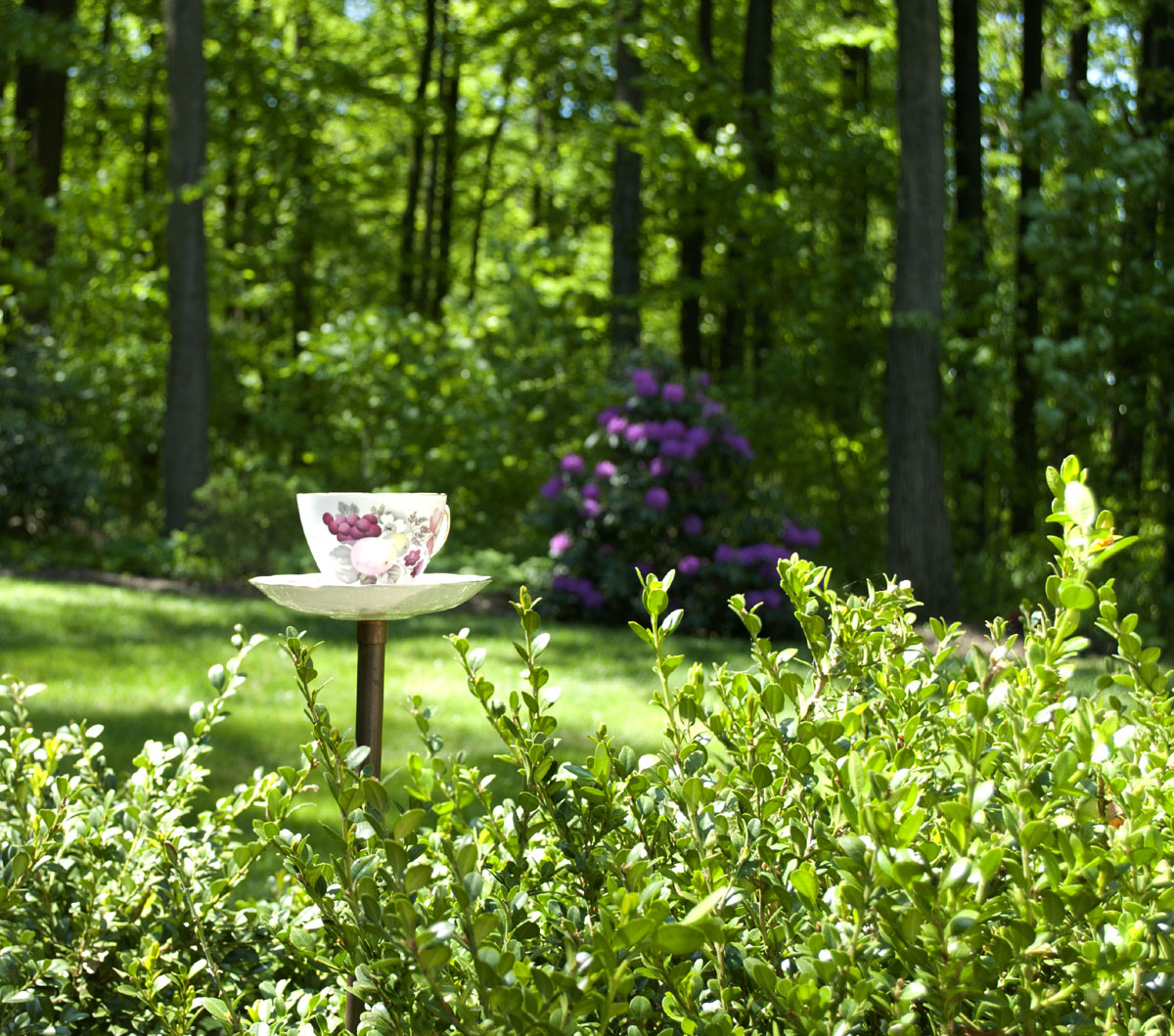
Catbirds take a bath in our garden teacup daily. 

I felt like a dunderhead. I was, however, a motivated dunderhead. The more I dug, the more enthused I became. Charlotte Mason supplied me with the "how-to" and the "why-to." I recognized that her books in my hands were a gift from God, a generous answer of prayer. Slowly and gradually I grew in understanding. Did I understand everything I read? No. Ideas take time to germinate, time to be contemplated, to be worked-out, to be lived-out. Ideas can't be rushed. Eventually, we find our feet by walking in them. The ideas become a way-of-life. It's the educational life.

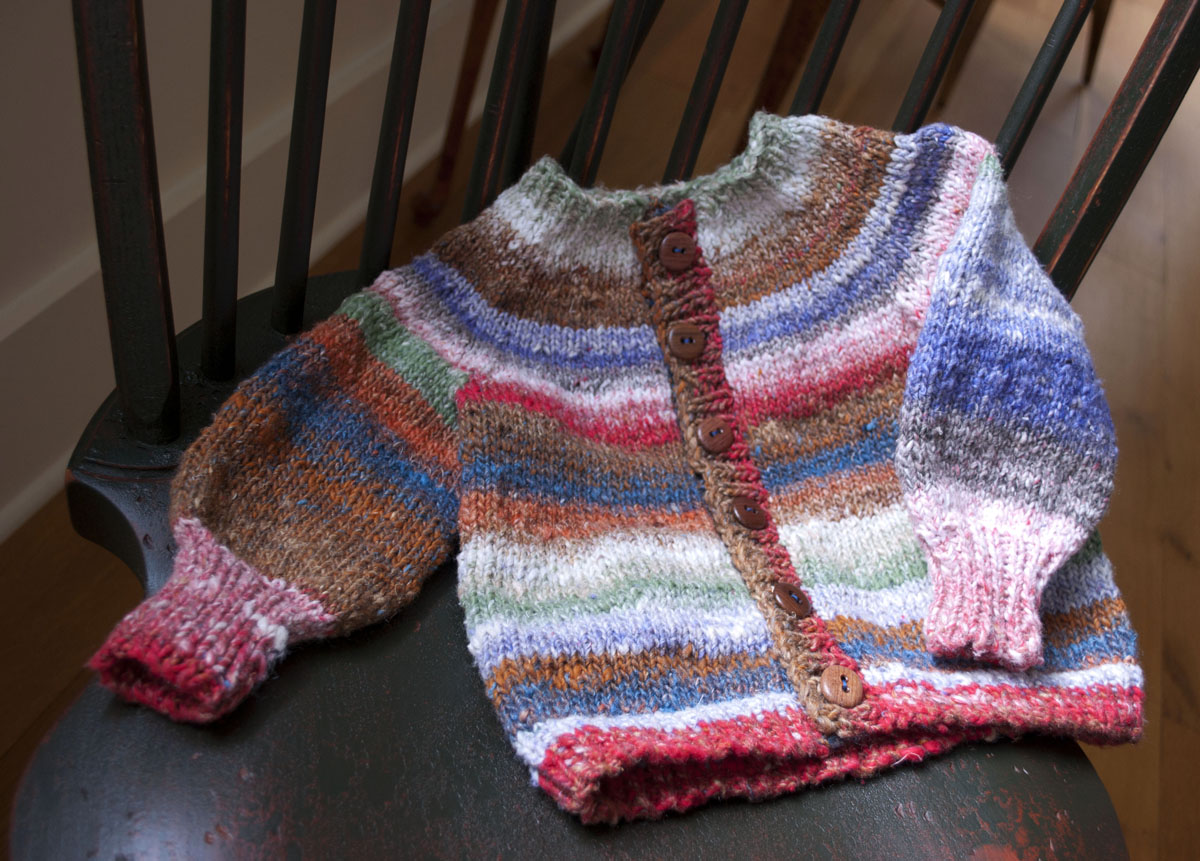
Knitting this yoke pattern for Eloise was a dream. It has 8 stitches to weave under the arms and no other seams. 

I've noticed something. Charlotte Mason's principles fit different circumstances beautifully. The people applying them are of different financial means. They have different backgrounds, different personalities, gifts, talents. They even live in different parts of the globe. Some with English their second language.

Miss Mason's principles are not just for the well-to-do or the well-prepared. They aren't solely for the intellectual. My husband Dean told me Miss Mason's principles are basic enough for even simple people (like us) to understand. She reached out to the poorer (less-literate) classes as far back as when she gave her lectures in London in the 1880s, and thereafter. I can relate. I was Less-literate with a capital "L".

Johnny-jump-ups with pansies. Potted herbs behind. Outside the kitchen door. 
Margin
Miss Mason's ideals are high. I craned my neck looking up. But it is a road worth walking no matter what situation you are in at the start. However others carry-out the method today, however well-accomplished the PNEU was in its hey-day of the 1930s, you are left to personally to find your feet. Please give yourself margin my friend. With respect to the person God is making you to be, respect your personal application.

Weigelia and Dianthus along our garage-shed.


On page 38 of School Education Miss Mason invites teachers to recede. Teachers are to make room for students to "feel their feet" with what they are learning.

We inspire. We set-in-motion habits and skills. Then we recede. This way we do not continue to indefinitely "carrying them through their schoolwork." Rather, we give them margin while we set their feet in a land-of-opportunity. Self-education is the result.

The same can be said of mothers.  Home teachers are learners, too. Are you giving yourself margin? Let's be courteous. Let's give each other margin.

Dean says, "The Charlotte Mason Method shines brightest when we allow ourselves the freedom to adapt Miss Mason's philosophy to our own individual domestic circumstance. We are, then, free to be ourselves before God and our children."


Some seek exact recipes. By focusing on the letter-of-the-law, however, we can miss living by the spirit-of-the-law. A mother misses the joy of learning with her children when choosing exact recipe over personal application. Miss Mason's principles are living principles meant to be a blessing.

A Mixed Bunch 
Weigelia and Dianthus along the garage-shed, close up.
We are a mixed bunch of Charlotte Mason followers. I know because I've had the pleasure of meeting some of you through the mail.

One family fills a handful of notebooks on various subjects. You're impressed. Your family started one or two. These notebooks are half-filled by the end of the school year. But they are handsomely half-filled. This will do. Each notebook represents happy days of curious and focused learning.

One mother reads Plutarch annually. Another mom prefers to read a little Plutarch if any, especially as she has shelves of carefully collected juvenile biographies filled with "lives." Such a quantity of lives for children was unavailable in Miss Mason's day. Go for it.


My new little quilt of scrappy "Broken Dishes" beside the Dianthus.
A pastor friend of yours, who lives an hour away, had his children memorize Shakespeare. He sends you an invitation to the performance. You take the drive to "hear" and see his students perform The Tempest. It's thoroughly enjoyable. Your family has appreciated Shakespeare. But directing a full-length play isn't an undertaking for you.

All 5 of a family's children play a string instrument. Even the 4-year-old takes lessons. Private lessons aren't in your budget. But since your eldest babysits she can help pay for hers. The younger children must wait their turn to start. They like hearing Big Sister play and look forward to when they will start their lessons.

One mother's student receives a lesson in Latin from his father daily. You tried Latin but it tipped the scales for you when your 6th child was born. And someone has to get a healthy supper on the table. Your husband isn't likely to teach his children Latin. Even if you ask him. He bought his boys catcher's mitts and enjoys playing ball with them out back. "Just what they need," you're thinking as you watch their energy through the kitchen window, "a good work-out." You offer a prayer of thanks while peeling the carrots.


I enjoyed lining one garden with seashells I beach-combed  years back. 

One mother teaches her little ones Sol-fa. It is important to her that they are brought up to sing well.  An elderly man in church is stricken with A.L.S. Mom, Dad, and the children visit him one or two Saturdays a month. The little ones sing for the man they affectionately call "Grandpa." The tears in his eyes show how touched he is by this gift of friendship. He has no grandchildren of his own to visit him. Your children can carry a tune. It's a joyful noise.


One family has traveled miles to the Creation Museum. The ark was spectacular. They've also taken physical-geography-walks. Their interest in rocks, fossils, dinosaurs, and land formations never seems to wane. They tell you about their experiences excitedly. You're glad for them. But you can't see your family traveling that far anytime soon with a van that needs frequent engine repair. The Nature Trail at the edge of town is a hike your family enjoys. And some books from the library-discard-sale are proving insightful.


Wooden Buttons The Yarn is Noro silk/cotton with slubs.

Keep Your Focus

While you are finding your feet you can't help see what others are doing. But you can open your eyes wider to what you are accomplishing. Look at what you can do. You are faithful to get up every morning to do it. And if it isn't done as seemingly radiantly, or as grandiose, as others. It doesn't matter. Your gifts, talents, interests are being used in your family. They are radiant. Because no effort, no love, no good work, is invisible to God.
My fieldguide says this is a Fleabane Daisy. I learned something new.

Part Two on this topic is upcoming.

Well done my friends.
Karen Andreola