Showing posts sorted by relevance for query we help mommy. Sort by date Show all posts

Saturday, August 15, 2015

Born in a Story Garden

Born in a Story Garden 
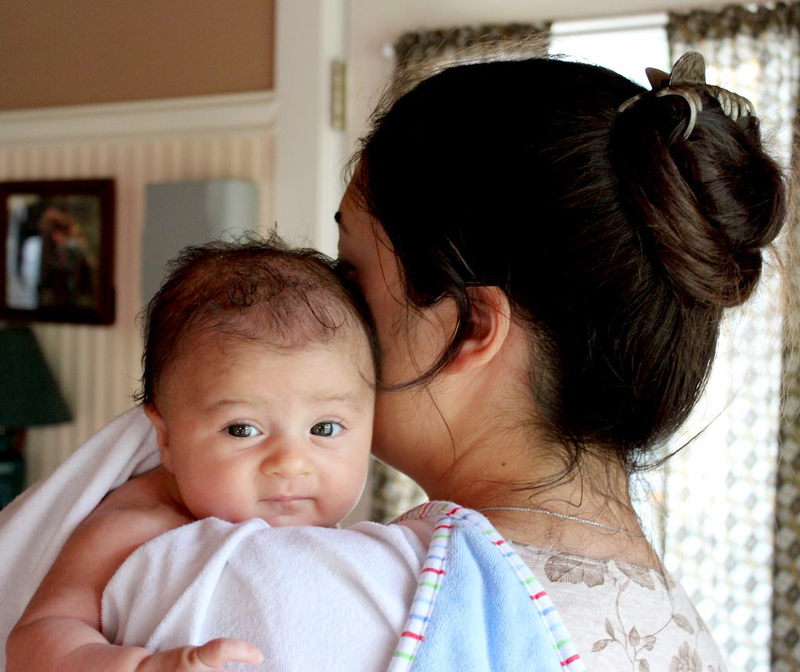
Our daughter Sophia had her baby. She named her Eloise Victoria. Born 6 lb. 9 oz. she is a tiny baby still - a month later. (I announce it here for those who missed reading the comments added to the previous post.)

Eloise Victoria  - Great Grandma knitted the pink blanket

Baby Dear
Baby Dear
Victoria, her middle name, marks the victory of her birth - after a difficult pregnancy and high risk delivery. The name Eloise is in memory of illustrator, Eloise Wilkin, whose storybook pictures influenced Sophia's ideals more than I'd ever stopped to consider. I am seeing the fruit of this influence now. How - when a little girl - she collected the images of the pages I read aloud to her 30 years ago.

Into her imagination and she stored them - held them there for safe-keeping - dreams for her adult life - like a carefully stitched patchwork quilt is held in anticipation in a trousseau.

Sophia even decorates her house like the rooms pictured in Eloise Wilkin's illustrations.

The simplest of books can influence our lives with profundity. A picture book, for instance, has this power because it invites us to look closely at a portion of life. Simple it may be, yet it is never without an opinion.

Eloise Wilkin
Baby Dear - feeding time
Could Eloise Wilkin have foreseen that what  she drew in the 1960s would become a boost of needed encouragement to mothers half a century later - mothers of this multiple-screen age? This encouragement is especially appreciated for some of us who are having to re-invent motherhood - to form a picture of its tenderness and daily-patient-care in our minds. We welcome images of a gentle, cheerful and relational mothering.
Eloise Wilkin
Baby Dear - walking with our babies
Some of us are having to re-invent childhood, too. Those images of an old-fashioned childhood - when children were free to be playful, carefree children - and not be introduced to the adult world so soon. These happy childhood images can still be had through old books. They seem absent in the major media, unavailable in modern society - or in neighborhoods where, during the day, no one is at home.

Baby Dear - singing to our babies

And, too, we crave reinforcement toward upholding the value of homemaking. Therefore, what was drawn as a mirror of home-life and childhood in the 1960s is being tapped into by today's busy mothers who secretly desire a career at home. If you are looking for a picture book with a worldview that celebrates the traditional family Baby Dear will be a welcome resource. It is included in the Golden Book collection, Eloise Wilkin StoriesWe Help Mommy can be found in the collection also.

little girl's dress in the 1960s
Yours Truly, 1963
A Resemblance 
we help mommy
When my mother handed me an old Kodak slide taken in my girlhood, I couldn't help notice how my outfit resembles those worn on the pages of Eloise Wilkin's We Help Mommy - puffed sleeves and all. At first I thought: What an uncanny coincidence.  On second thought I realized: Why should there be anything strange about it? I am a child of the 1960s and this photo is proof that little girls really did dress in a white blouse and red skirt-jumper for playtime - in the days when Eloise Wilkin drew her pictures.


Books That Pamper my Opinions
As stories influences our lives, the flip-side is also true. An author's lifestyle often finds its way into her writing. Diaries, in particular, disclose what the writer is moved to jot down.
garden diary with water colors

The same week my daughter emailed me some new photographs of her tiny Eloise I had The Painted Garden  open at my summer leisure. It is the diary of the gardener Mary Woodin.

In this book I can walk down Mary Woodin's garden path. Among her brief notes of sowing and harvest, blooms and fruits, birds and butterflies, are selections she uncovered from other gardener's diaries - mostly those from the 19th century. I am amazed at how skillfully she uses her watercolor brush to beautifully portray what is alive and growing in her garden. If you are looking for nature diary inspiration you will find it here.

flowers in water color

With my book open to the month of August I see a quote from Mrs. C. W. Earle's  Pot Pourri From A Surrey Garden, 1887.

"Of all the months in the year this is the one in which the keenest amateur can best afford to leave home, and if I do not go away, it is the one I can best spare to my gardener for his holiday."

Immediately following comes a sweet surprise. Mary Woodin writes:

A bit of a lull in the garden - an opportune time to give birth! Reuben Charles entered the world safely in the midday heat. He has quickly become accustomed to being my garden companion - his pram [baby carriage] neatly balancing my drawing board, sketching stool, and the jam-jars for water. Parked under a tree he happily applies himself to the subtleties of cedar, oak, or ash. Or sleeps.

I love babies, summer sunshine, and flowers. I love books and the snapshots they give us. I don't mind reading books by those who have a different worldview than I have. I can find them interesting.
I can't help, however, to prefer books that pamper by own opinions. Have you found this to be true of yourself, too?

Thank you
For you convenience I linked to Amazon: Eloise Wilkin Stories and also The Painted Garden.

Recently, Dean headed out for the post office with his arms full of boxes. Therefore, I want to give you an extra thank-you here. To tell you that I very much appreciate your purchases of Parents' Review, the Lavender Strawberry Kit and the Mother Culture CD this summer. I hope each brings its own form of uplifting sparkle to you..

News
This month, at a blog friend's prompting, I hosted a luncheon in my keeping room for some home teaching mothers. I fussed over the preparations for a week beforehand with Dean's help, even buying two new plates to add to my Butterfly Garden set. When the day came, sitting at the table, chatting in the company of kindred spirits, it ended up to be a mini vacation for me - without leaving home. I hope we can do it again, Ladies.


I talked about children's chores in the post: We Help Mommy.

Rosey-cheeked and Resourceful is a blog article that explores the sadly missing phenomenon of safe neighborhood-play. In the days of neighborhood play attention deficit was at an all time low.

Thanks for letting me share this bundle of news, memories, books and articles with you.

Karen Andreola

Post Script
Oh. I've been meaning to tell you. Between posts, from time to time, I give articles to The Old Schoolhouse magazine to help spread abroad the good news of Miss Charlotte Mason's practical philosophy. Here are two links to TOS that relate to today's subjects.

A Nature Notebook 

The Power of a Picture Book


Thursday, September 1, 2011

A Cleansing Breath for Mother Culture


A Cleansing Breath for Mother Culture

Those who have undergone physical therapy know that between exercises it is advisable to take a deep “cleansing breath.” Remembering to stop to take a cleansing breath among complex responsibilities is a principle I’ve carried over into Mother Culture - both literally and figuratively.

Several weeks ago our 1997 American-made car was equipped with a new transmission. “They don’t make cars like this anymore,” I was told. I believe it. I am a trusting wife - generally. Feeling something like what the owners of a new car must feel, Dean and I filled the trunk with provisions. It held a weighty ice chest of local produce, homemade raison cookies, farm eggs, the big camera, two suitcases of holiday clothes, suntan lotion, straw hats, sundry books and (I didn’t forget) yarn. With the packing complete we set off on a few days vacation on the Jersey shore. My parents live in a bungalow a block from the ocean.

Dean and I do not travel lightly. In the heat of the glaring sun we (Dean mostly) walked back and forth unpacking the trunk, armload after armload. Mom and Dad’s neat little bungalow was quickly transformed into a house of stuff. Normally, during our short visits I try to conceal our stuff in assorted baskets. Alas, it still looks out-of-place.

Glad to see us Mom and Dad graciously overlooked our clutter - as always. Then we settled down to a good long chat. A sea breeze drifted through the windows cooling our brows as we unraveled the details of our lives. We tossed in all the family news we could think of for good measure.


In the mornings I put on a vintage (sounds nicer than outdated) Laura Ashley dress for a quiet walk at low tide. Here I took a cleansing breath – a whole series of slow deep breaths this time  – of salty sea air. It was windy yet invigorating. 

A flowery dress at the seashore fulfills a romantic notion of mine. 

The yellow dress with the coral flowers and the shawl collar has a string of memories attached to it because it was purchased twenty years ago. A first violin recital, a home school graduation and a speaking engagement are a few memories that stand out. 


The mostly orange dress here and at the start of the post is one Dean bid for me on e-bay last year. The cost was quite reasonable. I’ve only started making memories in this one.

We walk up the beach in silence, but in harmony, as the sandpipers ahead of us move like a corps of ballet dancers keeping time to some interior rhythm inaudible to us. . . Emotions are carried out to sea. (From Anne Morrow Lindbergh’s Gift From the Sea chap. 6, page 101 in my grandmother’s copy handed down to me.) 


From my beach bag I placed a child’s cotton sweater at the edge of the dune grass. It’s a pleasure sharing my knitting with you. 


Dean, who uses his camera more intelligently than I, and wanted to protect the lens from windblown sand, took the photographs for me. It was nice to have his help - although I’ve learned to save knitting as a subject of conversation for those more readily inclined.


The variegated blues and wavy wool cables of this size-two cardigan make it at home at the seashore. I had fun knitting it from a pattern by Yankee Designs. Can you see the little wishbone cables one stitch in width? They remind me of horseshoe crabs in this setting. Seed stitch and blackberry stitch are placed between the fisherman ropes. 


While braver souls - at least half our age - were going in deeper, we faced the breaking surf our own way. We were jostled by the foamy undertow. How refreshing the water was – even if somewhat wearing. Returning to our umbrella the cameraman was smiling. He was satisfied that, yes, his wife now drenched in seawater, was indeed having a good time.

Next came the relaxing moment I had been anticipating. I took out of my beach bag the beginnings of another little sweater. Its stitches were cast on at home, a week prior with the hope of spending an hour of knitting bliss in the shade of a beach umbrella - the ocean before me. Involuntarily, I sighed after my second row. Then I remembered. I closed my eyes and took a slow cleansing breath. Gratitude inhabited the pause.


For body and soul, in your everyday, will you remember to literally take a cleansing breath now and again? Also for your Mother Culture I hope you will consider taking one figuratively - in whatever way you come up with. No doubt it is fast becoming a busy school year. 

Post Script

After a bath Baby is happy when wrapped in the green blanket Mommy knit for him. 


She only knits when expecting. That’s okay. Another knitter is keeping an eye on domestic supply-and-demand.


Blessings to you
Not for knitters only,

Karen Andreola

Monday, June 25, 2012

Music in the House


 Music in the House


     Here is an idea I considered when my children were small. In proportion to how much music, literature, poetry and art make up a lifestyle they will seem less like school. They will be part of living "the educational life." This was one of my aims in teaching within a home setting. After all, music is music. It really isn't a school subject. It is fine to make it a school subject. But let's remember, too, that literature is literature, poetry is poetry and art is art.

"Christian homes should not be places where nothing but a bit of sentimental or romantic music is heard, but places where there is the greatest variety of good music, so that the natural talent may find the necessary spark to set it on fire." Edith Schaeffer

     I reference Edith Schaeffer's Hidden Art of Homemaking because to her, music is part of homemaking. I like this idea. Do you find it interesting, too? Her music chapter is early in the book. In it she encourages the family to listen to good music in the home, to play it together on their musical instruments, to make a joyful noise to the Lord together, and also to invite friends to play on their instruments with hospitality.

Six Pieces of One Composer
     A rule of thumb for putting students in touch with the music of the great classical composers is this: Choose at least six of a composer's pieces. Repeated listening of one composer a semester is recommended. In this way children will get to know a composer, become familiar with his style and recognize his signature sound. This rule of thumb leaves room for adaptations outside a classroom. Casual listening in the car while commuting thirty minutes to town was an adaptation of ours while living in Oregon, Maryland, and then Maine. Music was also heard at the kitchen table while children drew, while folding clothes, doing dishes, or resting on the sofa with a head cold to "feel better" - or simply welcomed as a "down-time" activity on Sunday.


     Dad was frequently at the helm in introducing music in the house. One of his hobbies is listening to a large variety, old and new. He occasionally plays old record albums and holds the opinion that music sounds best on vinyl. Contemporary Christian music was Dad's choice in the car to and from church. Mom might read a hymn story during the week and teach the words of some favorites.

     Along with music appreciation, when each of our children reached the age of twelve he or she was offered private lessons on a musical instrument. They each took hold of the opportunity. Daily practice and all their years of prior listening helped blossom talent – just as Edith Schaeffer claims. It plucks this mother's heartstrings (a pun, because I cannot play an instrument) that although our adult children, Sophia, Yolanda and Nigel, attend different churches they each take part in Sunday worship on violin, cello, and piano.
 An Interview
     Today's post is an interview with our married daughters. Sophia is married to Andrew. 


     Yolanda is wife to Daniel.


     You are invited to visit their websites linked below. Let's talk to Yolanda. Being that she is the second child and literary plays "second fiddle" we'll talk to her first just to shuffle the order of things. 

     Yolanda, what are your earliest memories of music in the house?

     I listened to lots of classical-style music when I was little. One early memory comes to mind when I was feeling sad. Our hamster died. I hid inside the curtains. Dad had on a favorite album of his called "Secret Garden" by Rolf Lovland and I remember listening to it from my hiding spot and sympathizing with the beautiful sadness of the violin and piano. It is a favorite of mine still today and I can see how the sad melodies in that album have influenced some of the instrumentals I've written.
     Another memory I have is a cassette tape of classical guitar music. I don't know how often I played that tape while I did my math, but I'm convinced it helped me to concentrate.

     What are your early thoughts of the cello?

     We had a recording of "Beauty and the Beast" that I listened to frequently as a little girl. There is one part in particular where a cello plays a solo line above the orchestra in sad lament. I remember thinking it was one of the most beautiful things I'd ever heard. When I was 12, Mom asked me if I would like to learn the cello. I said yes. All I knew was that it was different than my big sister's violin (so it would be my own) and that I liked the sound. Little did I know how very thankful I would be years later for my mother's suggestion.


     Does this instrument require lots of practice?

     Yes. For the first few years my upper back hurt when I practiced longer than a half hour. Dad took me to the chiropractor. The doctor told me I had a knot in my upper right shoulder blade area. He said it was similar to the knot a golfer gets because both cellists and golfers work one side of their bodies more than the other. Although my back doesn't bother me much anymore, my fingers get sore after about two or three hours of performing, but the joy I receive and try to give to others is definitely worth it.

     How did you like growing up playing music with your big sister?

     I loved being able to grow up playing music with Sophia. I remember the first time we played a duet together in church. I was nervous. But since we chose a simple hymn it went well, which gave me confidence. Recently, Sophia and I performed for a wedding at Franklin and Marshal College in a pretty old chapel with rich acoustics. The sound of our instruments together was lovely. We can quarrel - just a little - when we rehearse, but when we perform our music has a special harmony and flow. I guess it's all part of being sisters.

Playing for an outdoor wedding 

     Has listening to music influenced your playing?

     For Christmas one year Dad bought me a set of Jacqueline DuPre's best cello recordings. She had a romantic influence in her interpretations that has had a decided influenced in my own style.

     Did you like your cello teacher back in Maine?

     I really enjoyed lessons with my cello teacher Mr. Myers. He inspired me to keep learning, enjoyed conversation and taught me many of the favorite cello pieces I play today. What I looked forward to the most in our lessons were the duets we played together. I try and emulate many of the same traits when I teach - including the duets. When Daniel and I drove from our home in Pennsylvania up to Maine on a short holiday, we bumped into Mr. Myers in a café near Bar Harbor. Here is a photograph of us enjoying the very pleasant surprise.


     I gave all my children, at once, a penalty for an "attitude," back when you were in your early teens. I've forgotten the offense (you were mostly good children) but I do remember I was upset when I decreed, "No music in this house for a week."

     Grounded from music? Oooh.....that was not the penalty we wanted to receive. How the week dragged on. But I think the next day you said the only music we were allowed was the music we created ourselves. We didn't have much choice but to get out the instruments.

     What kind of music do you listen to now that you are mistress of your own?
home?

     I enjoy a wide variety. Dan and I put on Glen Miller's band from the 1940s while we cook Italian for dinner. I listen to Steven Curtis Chapman while I drive. His "Beauty Will Rise" is uplifting. A country song, every now and then, and a good Moody Blues tune are also enjoyed. On Youtube, I watch The Piano Guys - contemporary favorites arranged for piano and cello. Soundtracks are frequent choice. Howard Shore's score to "The Lord of the Rings," and Patrick Doyle's score to "Sense and Sensibility" are often heard around in our house.


     My last question is, what music projects are in the works?

     My journey with music has brought me to composition. Although I only write in a small way, each melody that stays with me represents another step in this journey.

     Being a Tolkien fan I enjoy the beauty of the Professor's writing and poetry. One day, reading through the poem, "The Horse and the Rider" I took my guitar and wrote a simple melody to fit the words. I try to capture the essence of Tolkien's words in a way that blesses the listener.

     
Sophia, how did you get started?

     As long as I can remember I've wanted to play the violin. I will never forget the day Mom handed me a slip of paper with a telephone number on it. "This is the number of a violin teacher," she said. "If you truly want lessons you will call her." I had never called anyone other than friends or family before and my hands shook as I punched in the number. This proved to her how much I truly wanted to play. 


     You started later than most of the other students who attended the group class yet seemed unperturbed at this.

     I still chuckle when I picture myself towering above the students in the group class - probably the only time I have ever "towered" in my life, he,he. I don't remember feeling perturbed at being the oldest. Perhaps this was because I was the oldest child in our family and often the oldest in my group of friends. I was not jealous of the young violinists who were ahead of me in the Suzuki books. Rather, I was inspired.
     Many Suzuki students begin lessons at age 4 or 5. Although I was 12 I do not believe this set me back. Now, being a Suzuki teacher myself and looking through a teacher's eyes, I've seen that what takes a 4 year-old a year to learn can be covered in a couple of weeks at age 12.

Sophia "towering" in the middle, 1994 "Old Fashioned Day"

     You had attended only few live concerts. What did you think of them?

     When we attend the Rockport Opera House in Maine it was fantastic to see and hear real musicians play in person. Hearing Vivaldi's "Four Season" by the Portland Symphony was a treat. While most of the Opera House visits were treasured I do recall one particular occasion I did not enjoy. A quartet upbraided our ears with a modern atonal composition that included startling yelps and barking sounds out of the mouths of the musicians.

     Does classical music help you keep pop music in perspective?

     While I do enjoy the occasional current pop tune the lyrics are more often raunchy than not. For my boys classical music or the Christian radio is a more edifying option. I like to play Bach after breakfast. Four-year-old William and I dance around the living room while baby Joseph waves his sticky hands to the rhythm from the safety of his high chair. Yesterday William laid his head on my shoulder as we swayed to a sonata. It will remain a treasured memory. It is rare that he stays still long enough anymore.

     What music did you grow up hearing?

     Mother taught us about the classical composers and Christian hymns while also enjoying John Denver. Father was known for the Moody Blues, Bread, Enya, Andrew Lloyd Weber, The Beatles, George Gershwin, Riders in the Sky, The Three Tenors, Silly Wizard, (Celtic), movie scores, and many others. I had a well-rounded exposure. 
     Just yesterday a friend wanted to know what was the first CD I owned. How could I forget "Mad About Violin," a Christmas gift from Dad?

     Ministering with your violin has been a special Christian part of your life since you were a teen. What gave you the idea to start the singing group "By the Power of His Love" in the church in Maine?

     Mom got me started almost as soon I could play my first song, using my violin to minister. It began with playing "Ash Grove" for nursing homes, my knees shaking and hands sweating. I don't remember how I began playing for church but I still play to this day. Playing for others has helped develop my skill for improvisation and playing with other instruments. 

The group is being silly holding all the wrong instruments. Our girls are on the far left.

     Our little church in Maine had a sweet group of home-educated young people with varying talents. After church service the young ladies often gathered around the piano. While Pastor's son played we would sing. We were eventually overheard by the grown-ups and asked to sing a special song for church. We enjoyed making music together so much that we formed a small group. We traveldc to other churches in the area and farther away as word-of-mouth spread. Pastor drove us in the van as far as Canada. We ministered with a set of praise songs, with instrumentals and personal testimonies. My fondest memory of these concerts is when I saw a young man being accompanied out of the sanctuary during a song. We were later told he had given his life to Christ that night.
     Before leaving Maine our group would meet together in a recording studio built in an unlikely spot – an old chicken barn – where we made a CD – a souvenir.

     In Maine you taught 30 students. Where you live now it's a different story isn't it?

     Teaching 30 students in rural Maine was a wonderful experience. I was one of two teachers in a 70-mile radius. Here in crowded Baltimore, Maryland when I was first married, I tried for a job at a music store near our one bedroom apartment. I was turned away for my lack of a music degree. My years of experience made little difference. Through a family connection on my husband's side, I found a teaching position at a music school. The owner was a divorce lawyer who had hated the job so much that he quit and started a music school. He said I was just what he was looking for. In his opinion a teaching degree does not necessarily make a good teacher. Of course I respect and admire those who have worked hard for one. 


     With two little boys keeping me on my toes I've taken on only a few students that come to the house. I look forward to teaching more and playing for more weddings with my sister as the boys grow up. This is the beauty of playing an instrument. You can use it in various ways throughout your life in whatever stage of the journey you walk. Mom, thank you for making me practice!
All the photographs of strings are taken by Sophia.


     Yolanda and Sophia, thank-you for doing the interview for my blog friends. It sets me walking down memory lane. I enjoyed being your mommy when you were my little girls. It's been rewarding to watch your journey through a beautiful girlhood into womanhood.

"Happy Birthday, Sophia." 
(She turns 30 today. When she was a 2-year-old I became interested in home education. My, the years do fly.)


Thanks for visiting, 
Karen Andreola 

Friday, February 22, 2013

What do You See? - Picture Study with the Gentle Art of Learning


What do You See?
Picture Study with the Gentle Art of Learning

     Outdoors, I took a peaceful early morning trudge to the mailbox in Pennsylvania snow. The snow, that fell silently in the night, looked magical. “Pennsylvania snow” is often the kind that melts in three days. Then another snowfall takes its place and dresses our house in white again. Indoors, I started sorting through books and sifting through old files. I found some things that might interest you for today’s topic.  


Art in Reach of Children
     If we want children to learn “art” the simplest and most natural way is to place some of the best art the world has to offer into the reach of children. Art is part of life – a life of ideas. Many of us were brought up to think of art as “art class” – another one of those classroom subjects that is over and done-with upon graduation. But the world of art is something marvelous that exists outside the classroom and is not confined to it. It is this world that we introduce to children – with a healthy dose of discretion - in hopes that they will form a relation.

A Main Resource
     Picture Study is one of the simplest of all subjects. An advantageous way to become familiar with some of the world’s greatest works of art is to open the pages of an art print book.  If you live in a major city and can hop on a bus to an art museum - that would be wonderful. But such an excursion is not something most of us can do regularly. Art print books are handy. They have beautiful reproductions. With the decline of bookshops and when public libraries are unsupplied, this resource could be less available than it once was. I’ve seen art print books abandoned in used bookshops and this, perhaps, may be the best place to find them. You’ll be surprised at how inexpensive they are compared to their original price upon publication.


     The Picture Study chapter in A Charlotte Mason Companion is a sort of teacher’s guide to get you started or to renew your interest. In it I quote from Miss Charlotte Mason.

“We cannot measure the influence that one or another artist has upon the child’s sense of beauty, upon his power of seeing, as in a picture, the common sights of life; he is enriched more than we know in having really looked at a single picture.” *1

How-To
     Prop up a book on a sideboard. Open to a work of art. (Conceal the opposite page if it also has a picture). Display the picture for a week or more. Let the children look and look. After a few days ask a child to describe what he sees. It’s this simple. 

A Fond Remembrance
     In the early 1990s I had the pleasure of written correspondence with Miss Eve Anderson, retired headmistress of the Eton End PNEU School in Oxford, England. With her fountain pen she was kind to answer my questions. I couldn’t travel when I was first invited to meet her but enjoyed our telephone conversation. Then, a few years later, I was blessed to spend a weekend with Eve Anderson. I treasure my remembrance of her. She has since gone to be with the Lord.


     When I learned that she attended a PNEU school as a young girl before WWII, I asked her what stood out in her memory. She wrote:

     From age 5-8 years I attended a PNEU school of probably about 30 children. It was a very happy time of learning, no stress, no pressure. I obviously learnt to read and write but what I most remember is the joy of the nature walks and coming back and painting in our nature note books. Also I remember vividly the picture study lessons, looking carefully at one picture and learning about the different artists each term. Parental support and interest is so vital. My mother used to take me to the National Gallery so that we could look at the original pictures that we had studied. She [built] in me a careful observation of nature at weekends and [encouraged me] to take interesting [nature specimens] to school. These two subjects have been lifelong interests.


One Artist After Another
     I found Charlotte Mason’s approach to art to be appealing when my children were still young. Yet, in the midst of our many household moves Picture Study would slip out of the schedule. I did learn that once you set your mind to do it (at lunchtime for example- with all the children together) it could be restarted without much ado. It requires foresight but very little time and effort to perform. 

    Although no fancy curriculum is needed, Picture Study is something Miss Mason recommends we do not leave to chance. Her plan is to “take one artist after another, term by term, and study quietly some half dozen reproductions of his work in the course of a term.” *2 This helps us become familiar with the style and characteristics of one artist’s works.


     “Oh look Mommy, it’s a Renoir,” a child may speak out when you enter the dentist’s waiting room and a reproduction of  “Girl with a Watering Can” is in plain view. My son and I got to see Renoir’s “Girl with a Watering Can” in person when we visited Washington D.C.’s National Gallery of Art in 2007 (his graduating year.) It was one he decided to photograph probably because of his familiarity with it during in our early years of appreciation. He also photographed the one painting by Leonardo Da Vinci there at the time. I liked the room of Dutch painters. That day was icing on our cake.  

Beyond the Pictures of His Storybooks
     What a sad state my copy of Famous Paintings is in. It is the book I used to help me write the art appreciation portions of Lessons of Blackberry Inn. Although the cover of Famous Paintings –Selected from the World’s Great Galleries and Reproduced in Colour – With an Introduction by G. K. Chesterton and Descriptive Notes - was irreparable, and did not survive a pipe leak in the basement, the body of the book, though dampened, is recovered. 


     Wishing to begin Picture Study with her children but finding herself without any sort of curriculum that includes six of an artist’s works, my character, Carol,  “makes do” – but quite happily so with FamousPaintings (which was in publication during the 1930s when the story takes place.) Although she doesn’t follow Miss Mason’s specific plan Carol follows the spirit of the law. 

A painting by Jean Francois Millet would be first to catch the eyes of the children.

     When her children are occupied in an adjoining room  – the little girls with a doll’s a tea party – Carol is in the sitting room among guests. She shares her opinion:

"My voice must have been laced with conviction because little by little everyone in the room became quiet and listened attentively . . . ‘Art training should proceed on two lines,’ I said. ‘The child should learn both to express himself and to appreciate, and his appreciation should be well in advance of his powers to express what he sees or imagines. His appreciation should go beyond the pictures of his storybooks.’ ”*3

My thoughts precisely. Imagine that.

Karen Andreola

End Notes
*1 & *2  Charlotte Mason, Home Education, page 309
*3 Karen Andreola, Lessons at Blackberry Inn, page 124

"A Fisherman," by the Swedish-born artist Anders Zorn was our next picture. Blackberry Inn

News
Pay Pal is now engaged as a means of purchasing the Mother Culture CD. I can’t imagine I will ever keep pace with the modern world. But I do take steps – however small. Thank you for your patronage and patience – to some I can say - “for all these years.”  

Saturday, January 26, 2013

High School, Too


High School Too 
     Miss Charlotte Mason’s principles begin with little children. They are a perfect fit for the elementary and junior high years. What about high school?

     When embarking upon the high school years I felt uneasy. One day, in our house in Maryland, I stood gazing out the dinning room window. The children were eating breakfast. I was dilly-dallying. “What’s the matter Mommy?” one said.
     “Oh, look, it’s snowing over our purple crocuses,” I said. “How pretty.” But the truth was I had a knot in my stomach. A brick school - a long established Christian school - was in clear view from the dinning room where we did much of our lessons. It was only three houses down the road – almost a stone’s throw from our front door -where I could have waved my children good-bye and watched them walk the entire way, had they attended there. But the school taught by methods that I did not esteem.


     I liked our little Charlotte Mason home school. The brick school didn’t teach as far as high school, anyway. Still, it taunted me. I was faced with the memory of my own school education. It was scrappy. It was also dull and impersonal. How could I give my children a high school experience that was interesting, vibrant, friendly, memorable, and a welcome challenge. I wanted to inspire my them with ideas and actions of Christian virtue but also empower them with skills for college. Gazing out the window with these desires and apprehensions rolling around in my head, it seemed a tall order. I stepped away from the window. The children were done with breakfast. “I’ll just have to brazen it out,” I thought. “I’ll put Charlotte Mason’s principles to the test some more.” Would her principles carry over to the land where I was about to roam?

     Yes.
    
     I found the same basic principles for the younger years work just as well for the more sophisticated work of high school. They work wonderfully. They are prolific enough for a lifetime of learning.  If you’ve read my posts under the label “A Charlotte Mason Education,” and my book A Charlotte Mason Companion you will be equipped with basic principles that are adaptable to high school.


Room for Unusual Resources 
     The Charlotte Mason minded parent chooses materials wisely. We look for materials that communicate well. Sometimes the material is packaged as a familiar hardcover textbook – a book most buyers (from a marketing standpoint) recognize to be a schoolbook. But the Charlotte Mason minded teacher is rehearsed in not judging a book by its cover. The freedom to be eclectic and also to take advantage of unusual resources will lead a family down interesting side streets.

     In high school we simply look closer at things – look at the finer details of science and history. The literature and poetry is more sophisticated.  A student’s writing will reflect this.

     I took a photograph of my 1942 issue of Life magazine for you. I found it in a moldy-shelved used-everything store. The feature article is a look at the average American 18-year-old. One such young man is on the cover. (Do you think his mother knit his vest?) These young men were being drafted to defend Christendom from utter annihilation. Not only was this a first-hand source for studying WWII with my student - Nigel at the time - it brought sobering thoughts to his mom. 


A Character All Its Own
     If I’ve been hesitant in sketching out a general plan for high school it is, in part, because ours was individualistic. My three students walked along different roads, read different books, and had different experiences. It may only be a little advantageous for you to have been a fly on our wall. Your home school begs to have a character all its own. A kind of halo surrounds you as your vision forms and you carefully individualize the lessons for your family. Your vision will be based on the conviction of your heart, your sense of the practical, your cultural heritage, and even the whims of your personality. This is what Miss Mason encouraged. Her readers were urged to understand and adapt “the spirit of the law” rather than be bogged down by the letter.  

 One Example
     When a Charlotte Mason Education is confined to a nutshell it risks emphasis on the letter of the law – a To Do list. “But the answer cannot be given in the form of ‘Do’ this and that,” Charlotte Mason tells us, “but rather as an invitation to ‘Consider’ this and that; action follows when we have thought duly.”*1 One ideal may be to study a Shakespeare play every semester - deemed a hallowed Charlotte Mason plan by some. A Charlotte Mason Companion offers a gentle how-to for studying Shakespeare, one that worked remarkably well for us. It resists, however, providing a scope, sequence or schedule for any subject. I think it best to leave these details to your prerogative and circumstances. 
     The group classes I gave in our living room, were open to the few other high school age students we knew. My students grew quite familiar with a handful of plays this way. (You don’t have to hold group classes.)
     My daughters especially, formed a relationship with Shakespeare. This was pleasingly evident to me when they spent a series of bored winter afternoons together, speaking all the parts of a Shakespeare comedy into a tape recorder – a sort of impromptu radio drama. Perhaps if I had scheduled a play every semester they would never have taken the initiative to enjoy one on their own. 
     Our family attended the occasional local stage performance, which is how a Shakespeare play is originally meant to be heard. (People of olden days used to say that they were going to hear a play because the stage lacked scenery and it truly is about words.)
     During Nigel’s high school years Dean taught Henry V to a group of mainly boys. (I kept a copy of the invitation – shown here.) Nigel was a science guy, however, and at that time we had other fish to fry so he didn’t take part in as many group studies as his sisters.


Home Education and Life
     Around that time we were preparing well ahead for a major household move – from Maine to Pennsylvania. The day of our garage/used-book sale I met a home school mom with a pleasant face and clear blue eyes. Yet, the corners of her countenance spoke “care-worn.” She stood with an empty book-bag in hand and with her lovely teenage daughter beside her.
     “Hi, my daughter plays cello, too,” she said with a smile. “She’d like to meet your daughter.”
     “Oh, hello,” I said and called over, Yolanda.

     The girls talked. We moms did, too. After a pause in our light chatter the mom made a confession. “We’ve had a different sort of year,” she said. “My daughter loves her books, narrates lots, keeps a diary and is good with a needle. But my sister had cancer and she [the daughter] is behind in math.” I instantly read between the lines. Out of love this mom had been caring for her sister. Cheerful companionship was needed. Perhaps meals were brought over regularly, housework was attended to for her sister’s family, and the daughter had either helped out more at home or came to her mother’s side at the aunt’s house. It made me wonder what kinds of precious life-lessons were matter-of-factly recorded in the girl’s diary.


     “What your daughter learned this year cannot be gotten out of any schoolbook, I told her. “Lessons of love. Never-mind that she is behind in math,” I added. “This summer you can regain some ground.” She smiled again, filled her bag with book bargains and I never saw her again. But her example of love stayed with me. She taught her daughter no sigh of idle piety (Oh, poor so ‘n so) but rather, a practical piety.


     That spring I arranged to teach my high school daughter, Yolanda, finer skills for sewing and cooking, one on one. On second thought I invited her friend to join us for our cooking afternoons. I doubled the recipes.


     The girls became good at chop, season and sauté. The friend carried a hearty-sized portion of food back to her house. These were the weeks her mother (my friend) was recovering from surgery and the meals were welcome and appreciated.


Narration Culmination
     What works for the early years culminates in high school – beautifully. A student raised on ideas from a wide curriculum has grown accustomed to gaining knowledge through his developing imagination and his narration. His years of narrating orally (putting the reading his own words) have equipped him to speak and write with far more fluency than he would have gotten by years of multiple-choice or fill-in-the-blank. He has grown accustomed to being thrown into company with authors. With some “wise letting alone” the maturing student goes off to a quiet corner to read and then write in his notebook (or open a Microsoft word document). His prior years of narrating carry over strength-of-skill for high school.
     If Miss Mason’s gentle methods are new to your high school student, and he finds oral narration to be awkward, he might narrate more readily in writing. Confidence is a slow growing plant, said George Washington. Take heart. Your older student’s abilities will eventually blossom. Talking together about life and lessons is helpful. Tutoring is (or was) used in colleges of renown.

     Formal examination questions can be set on a variety of subjects. These questions require the student to write about what he had learned during a semester. Examples of narration questions (for the younger years) are provided in A Charlotte Mason Companion. Questions for high school follow the same principle.
   
     The acquired skill of narration works well for history and literature but it sheds its influence upon other subjects. My daughter Sophia’s detailed drawings and lab notes for dissection came by smooth effort because of her prior years of narrating. Remember I said high school is looking closer at things? Well, in this instance I was relieved that another mother, who was a veterinarian before she had children, taught dissection at her house. We bartered. I taught her students Shakespeare at my house. 

     Dean taught a speech class in our living room open to our high school age friends. How marvelously, narration empowers this subject. 

In Closing
     We want to challenge our students. There is value in a measure of hardness to what they are learning. But if books and materials are “living” they can be a merger of levels  – especially when this merger satisfies the versatile spirit of the law for the love of knowledge and supplies food for thought – ideas. Miss Mason observed:

     “Our schools turn out a good many clever young persons, [lacking] nothing but initiative, the power of reflection, and the sort of moral imagination that enable you to ‘put yourself in his place.’ These qualities flourish upon a proper diet; and this is not afforded by the ordinary schoolbook, or in sufficient quantity by the ordinary lesson."*2  

     I hope to share more examples from our home school in response to the questions I’ve received. I aim to encourage, help you focus, help you not loose heart or your sense of humor  –– but I wouldn’t wish to contribute to “information overload.” Trust your God-given vision.

     Comments are welcome,
     Karen Andreola

End Notes *1, *2, Charlotte Mason’s A Philosophy of Education, pp. 24 - 25.